Second Act and Upcycling
Promote zero waste through upcycling, recycling and composting.
The devastating impact of single-use plastics and pollution demands urgent, collective global action. Through sustainable advocacy and civic engagement, we empower individuals to reduce and divert waste from landfills, in an effort to advance zero waste, low impact living.
Second Act
We advocate for a true circular economy by supporting responsible consumption, regular reuse, proper recycling, and avoidance of single-use items. We help residents divert hard-to-recycle trash away from local landfills through designated community drop-off points and corporate recycling partnership with Terracycle, Ridwell, etc.
Hard to recycle items include e-waste/ batteries, soft plastic, etc.
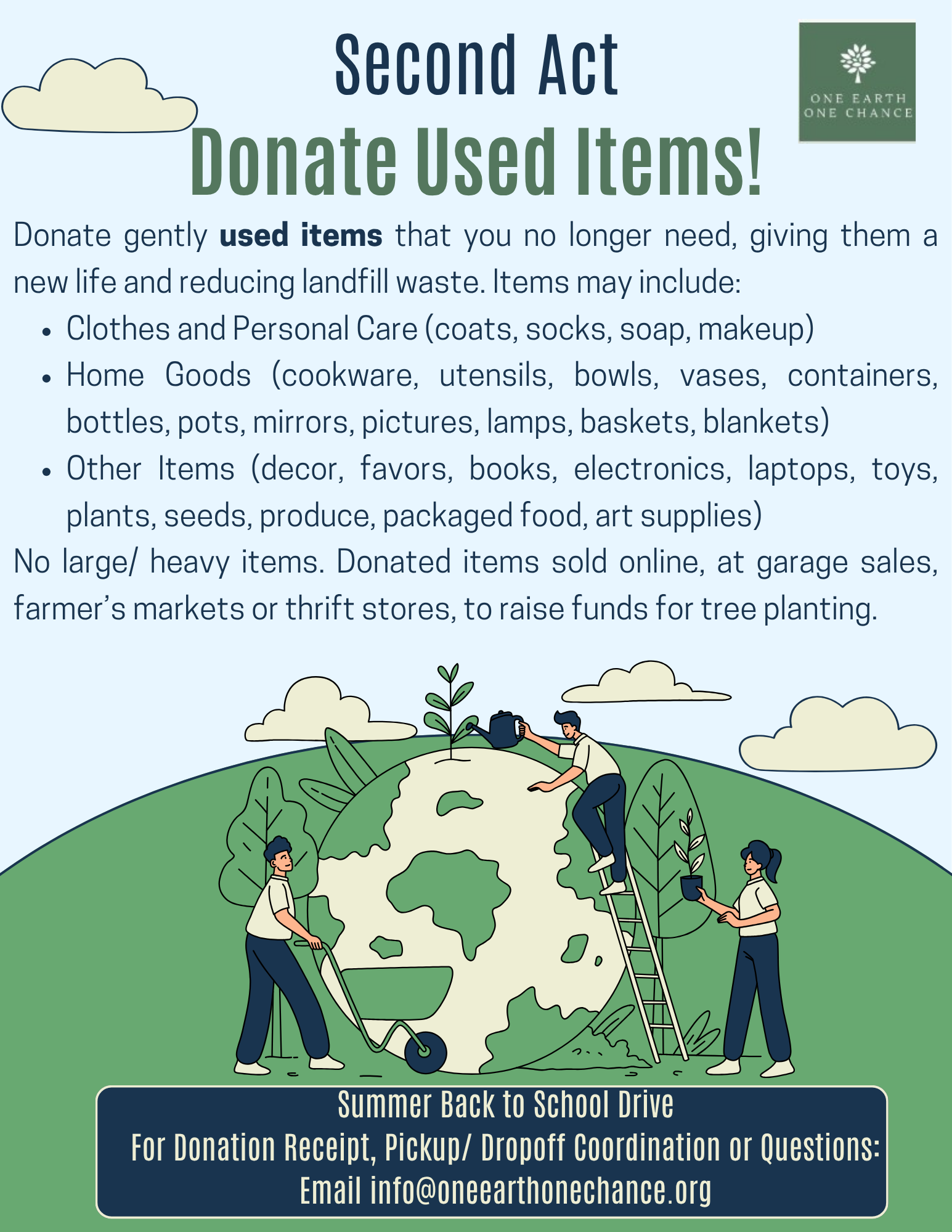
Central to this effort are our Second Act community drives. We gather a wide variety of gently used items—including clothing, home cookware, books, and small electronics—to give them a new life.
Collection of used Items (no large and heavy items).
Clothes (linen, cotton, silk, wool, denim, coats, socks)
Home (ceramic, glass, cookware, utensils, bowls, vases, containers, bottles, pots, mirrors, pictures, lamps, baskets, blankets)
Other (decor, favors, books, electronics, laptops, toys, plants, seeds, produce, packaged food, soap, oil, makeup)
Collected items are either donated directly to those in need or resold. Every dollar raised through these sales directly funds our native tree planting programs. This continuous loop promotes widespread reuse, slashes landfill waste, and lowers consumer demand for brand-new manufacturing.
Upcycling
Upcycling is the creative process of turning old, unwanted, or discarded items into new products of higher quality, practical use, or artistic value. Unlike traditional recycling, which breaks down materials into raw components, upcycling keeps the item intact and adds value to it.
Benefits of Upcycling
Reduces waste: Keeps items out of landfills and reduces trash.
Saves energy: Avoids the heavy energy use required to melt or shred materials.
Saves money: Turns everyday household trash or thrift finds into useful decor.
Encourages creativity: Makes unique, one-of-a-kind pieces.
Common Upcycling Ideas
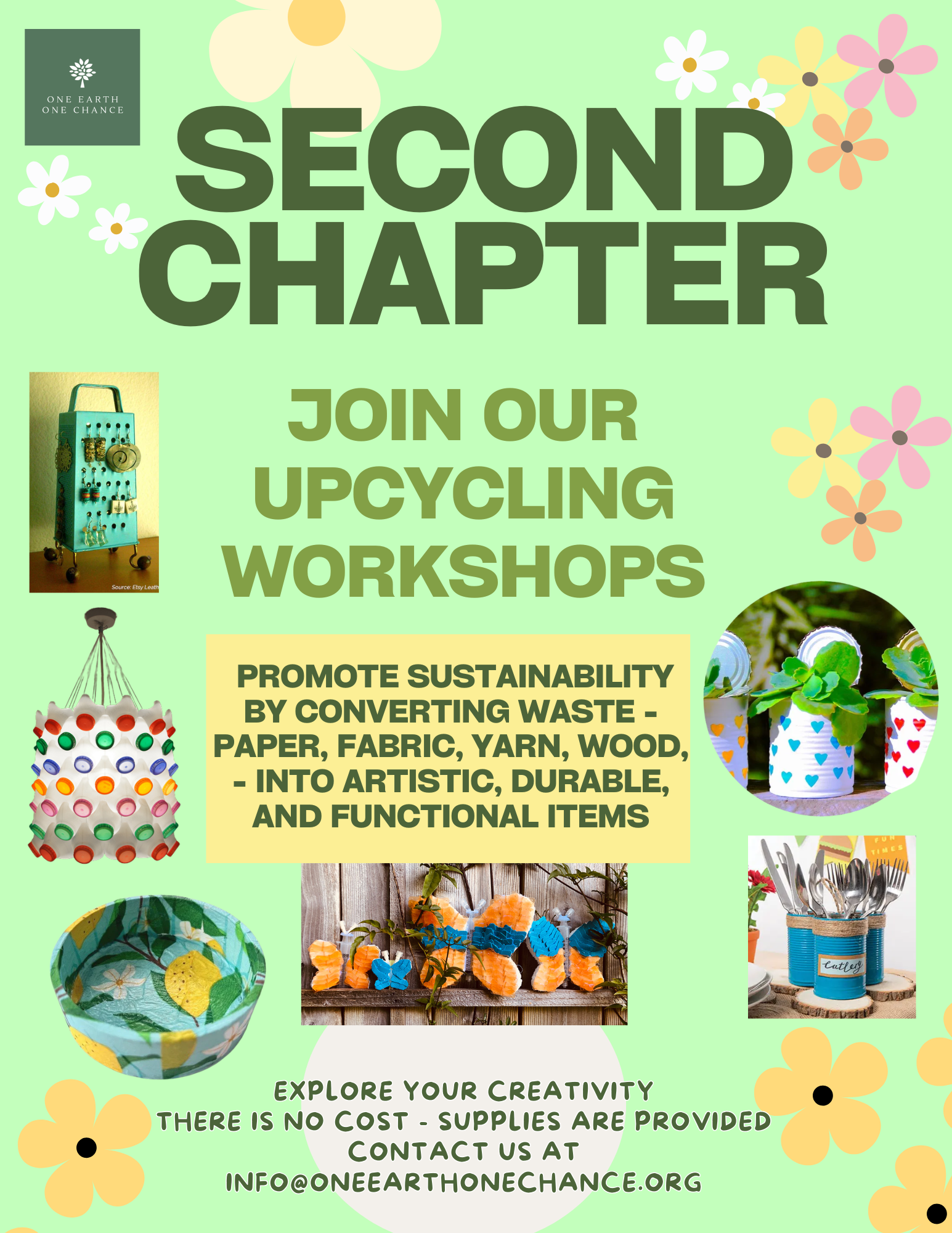
Glass jars and cans: Turn empty food tins into plant holders or glass jars into vases.
Clothing and textiles: Cut old jeans into tote bags or patch together fabric scraps to make new clothes.
Join our monthly upcycling workshops where you can help promote sustainability by converting waste like paper, fabric, yarn and wood into artistic, durable and functional items. You can explore your creativity while enjoying the company of like-minded people. Supplies are provided and there is no cost to participate.